

Rehumaning
Since when do we stop feeling the joy of being human?

This essay isn’t necessarily about humanity, which, I assure you, still hasn’t been written about enough, even if it feels like the only thing we’re seeing these days.
This essay is about cultivating what it means to be human to ourselves, with our “selves.”
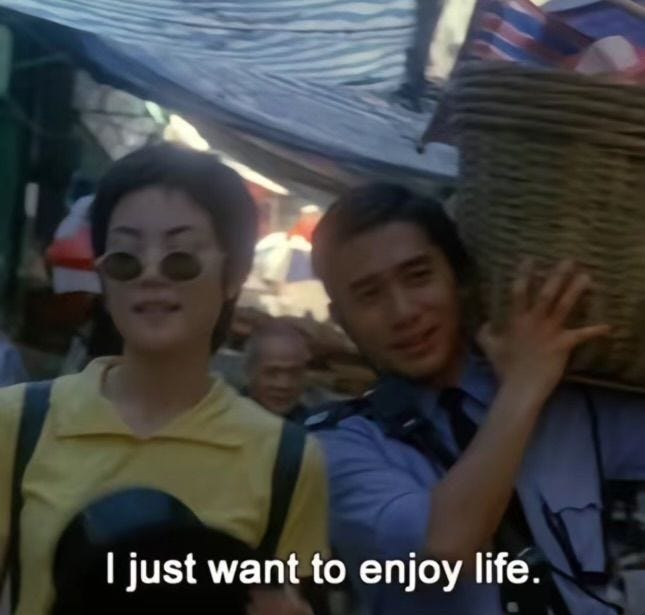
Recently, I’ve found myself deep in the space of self-betterment and all that corny shit. I know why I came here—I did want to do better. But somewhere along the months of trying to build a business I didn’t believe in, and transitioning into a job that stripped away my basic rights of being human (to play, to have fun, to feel free), I hit escape on my own perspective.
I zoomed out—bird’s-eye view.
And I saw myself getting entrenched in the maze of comforts the world had to offer:
the comfort of being stuck in a ‘good’ job that everyone hates,
the comfort of accepting a fatigued body,
the comfort of maintaining friendships through a single text with no effort,
the comfort of singlehood wrapped in the “fuck men” womansphere,
and the comfort of handcuffing myself to societal constructs that deny me the right to be my own person.
At this point, you might be wondering how I define humanity in an individual.
Let’s say fuck the Oxford Dictionary or any cult-led definition of the word “human.” My definition—because it is my life—is this:
Being human, to me, is to feel alive.
It’s our innate desire to want.
Our unconstrained ability to pursue.
Our infinite ways of making things happen.
And our relentless capacity to want again.
What does that word-vomit actually look like?
It looks like wanting to feel good and look beautiful. So you try some random diet you found online—realize it’s not for you, maybe even a little toxic—and move on. Somewhere along the way, you notice that the more you try to change your body, the more you realize you already love it. And because you love it, you start taking care of it. You get stronger. You feel good. You look beautiful.
And then one day, you don’t.
So you begin again.
It looks like having a dream and chasing it in the most exciting way you can. Then, realizing you don’t actually like it that much—but deciding to see it through anyway. The longer you stay, the clearer it becomes: it’s not for you. So you pivot. Then you hit the same wall again.
But this time, when you try to walk away, something keeps pulling you back. Opportunities. Curiosity. Momentum.
So you stay.
And somewhere in that staying, you fall in love.
You might think this is just life. Obvious. Nothing new.
But the more I look around, the more I realize this isn’t how most people are living.
The comfort of preconstructed lives has become too seductive—too easy to stay in. And honestly, I get it. It pulls me in, too. It takes a lot these days to choose to be my own human.
And as we drift further into this era of AI-shaped people—people who talk like ChatGPT, with em dashes and polished thoughts—we should probably ask ourselves something uncomfortable:
If our minds got hijacked by OpenAI tomorrow, would we be okay with how we lived today?
The job everyone complains about, but no one leaves.
The boyfriend who openly disrespects you, yet somehow you’re still there.
The quiet loneliness of hyping yourself up at night, but being too scared to ask your gym crush out just once.
Your life is exactly where you want it to be.
Right now.
It is.
It’s a series of choices you’ve made—whether or not they were shaped by your upbringing, your parents, or whether those people believed in therapy.
Everyone can have a sob story. Not everyone gets a happy chapter.
We’re living in an era where everything is at fault except ourselves. But for once, take responsibility for something that makes you feel alive—not just something that helps you survive.
For most, the change is overdue.
For some, it’s the difference between living and just getting by.